



El verdadero coste de la pintura antiincrustante tradicional
La aplicación anual de pintura antiincrustante tóxica es un gasto rutinario para los propietarios de embarcaciones a motor. El proceso implica sacar el barco del agua, preparar el casco y aplicar biocidas que se lavan en el agua. Las incrustaciones en los cascos de los barcos aumentan el consumo de combustible y las emisiones de CO2, y pueden causar mayores costes de mantenimiento. Los reglamentos REACH y de Productos Biocidas (BPR) de la UE están restringiendo los biocidas en las pinturas antiincrustantes; el tributilestaño (TBT) ya ha sido prohibido debido a su persistencia ambiental. Este cambio normativo hace que las alternativas sean más atractivas para los propietarios que desean evitar el ciclo anual de pintura y limpieza.
Coppercoat: una opción duradera pero exigente
Coppercoat es un recubrimiento no erosionable a base de epoxi que contiene polvo de cobre. Puede durar al menos 10 años, pero requiere chorro de arena en el casco y varias capas aplicadas en un solo día. El coste inicial es alto. Según las estimaciones para una embarcación típica de 36 pies, el coste total, incluido el chorro de arena, ronda las 6500 £, con un coste anualizado de 1083 £ durante seis años. Sin chorro de arena, el coste anualizado desciende a 833 £. Esto lo sitúa muy por encima del rango de la pintura antiincrustante anual tradicional. Para los propietarios de embarcaciones a motor que planean conservar su embarcación durante muchos años, Coppercoat ofrece una solución a largo plazo, pero la inversión inicial y el proceso de aplicación especializado pueden ser una barrera. El chorro de arena del casco no siempre es sencillo y puede añadir tiempo al proyecto.
|
Opción |
Coste inicial (aprox.) |
Coste anualizado en 6 años |
|---|---|---|
|
Coppercoat con chorro de arena en el casco |
6500 £ |
1083 £ al año |
|
Coppercoat sin chorro de arena |
5000 £ |
833 £ al año |

Revestimientos foul-release a base de silicona
¿Qué pasa con los revestimientos antiincrustantes a base de silicona, como Seajet Bioclean y Hempel Silic One, como alternativa antiincrustante que crea una superficie de baja fricción? Funcionan bien para barcos comerciales que están en constante movimiento, porque el flujo de agua ayuda a evitar que las incrustaciones se adhieran. Sin embargo, son menos efectivos en embarcaciones a motor recreativas que pasan largos periodos amarradas en un puerto deportivo. Si su barco permanece inactivo durante días o semanas, un revestimiento de silicona puede no proporcionar una protección fiable. Estos revestimientos también son más caros de aplicar que la pintura tradicional y pueden requerir una instalación profesional. Para los propietarios de embarcaciones a motor que utilizan su embarcación con poca frecuencia, el foul-release a base de silicona no siempre es la mejor opción.
Protección de hélices y tren de propulsión con Propspeed
Propspeed y su familia foul-release, que incluye Foulfree y Lightspeed, están diseñados para controlar el biofouling en hélices, ejes, timones y otros accesorios submarinos. Estas son aplicaciones importantes porque el crecimiento de percebes y algas en el tren de propulsión puede afectar gravemente el rendimiento y el ahorro de combustible. Si elige una alternativa para el casco, aún necesita tratar estas partes metálicas, y Propspeed ofrece una solución dedicada. Esto agrega un producto y un costo adicionales a su rutina de mantenimiento, pero es un método probado para mantener el tren de propulsión limpio sin biocidas.

Alternativas sin químicos que evitan la pintura por completo
Para aquellos que quieren dejar de usar pintura por completo, existen varias alternativas no químicas. La navegación en seco, el amarre en agua dulce, los elevadores de embarcaciones, los dispositivos de ultrasonido y los sistemas de luz UV son todas opciones. Cada una tiene limitaciones. La navegación en seco requiere una rampa adecuada y espacio de almacenamiento. El amarre en agua dulce solo está disponible en ubicaciones específicas. Los dispositivos de ultrasonido y los sistemas UV pueden ser efectivos en algunas condiciones, pero pueden no ser prácticos para todos los propietarios de embarcaciones a motor. Estos métodos pueden reducir las incrustaciones, pero a menudo implican compromisos en cuanto a comodidad y coste. Ninguno de ellos proporciona la misma protección continua que una barrera física en el casco.
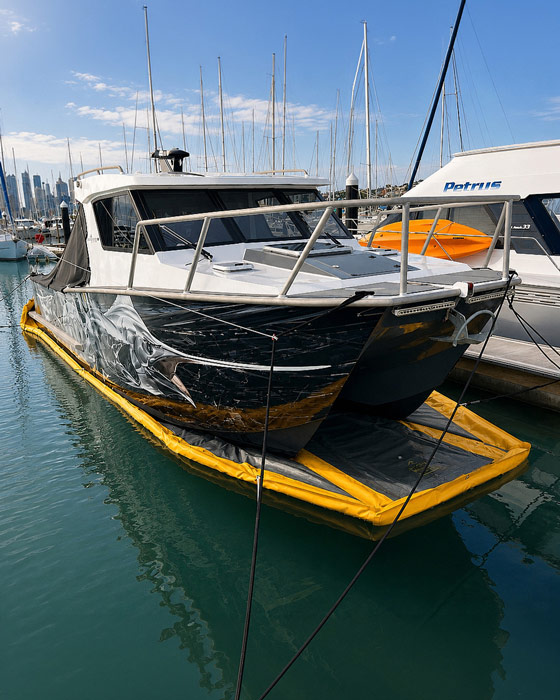
Por qué un protector de casco es la elección inteligente para embarcaciones a motor de menos de 40 pies
El muelle flotante y protector de casco Happy Hull ofrece una cubierta duradera, patentada y fácil de instalar que es una verdadera alternativa antiincrustante. En lugar de aplicar revestimientos que liberan biocidas al agua, se instala una barrera física que evita que el crecimiento marino se asiente en el casco. La instalación es sencilla y se puede realizar en el muelle, sin necesidad de sacar la embarcación del agua. Una vez instalado, el protector permanece en su lugar y requiere un mantenimiento mínimo. Esto ahorra tiempo porque ya no es necesario lijar, pintar y limpiar el casco anualmente. También ahorra dinero al eliminar el coste de la pintura, la mano de obra y las frecuentes sacadas de agua. El producto está diseñado para embarcaciones a motor de hasta 40 pies, lo que lo hace ideal para propietarios recreativos y comerciales que desean una solución a largo plazo y respetuosa con el medio ambiente. Un cuestionario de selección de tamaño en el sitio web de Happy Hull le ayuda a encontrar el ajuste adecuado para su embarcación, y hay un servicio de instalación en el muelle disponible si prefiere ayuda profesional.
Preguntas frecuentes
¿Cómo se compara un protector de casco con la pintura antiincrustante tradicional?
En lugar de utilizar productos químicos tóxicos para matar organismos, un protector de casco crea una barrera física que evita que el crecimiento marino se adhiera. Esto significa que no se liberan biocidas al agua. También elimina la necesidad de sacar el barco del agua y repintar anualmente, ahorrando tiempo y dinero. El protector es duradero y está diseñado para durar muchas temporadas.
¿Es el protector Happy Hull adecuado para todas las embarcaciones a motor de menos de 40 pies?
Sí, el protector Happy Hull está diseñado específicamente para embarcaciones a motor de hasta 40 pies. Se puede adaptar a una amplia gama de formas y tamaños de casco. El cuestionario de selección de tamaño le ayuda a encontrar el ajuste correcto, y hay un servicio de instalación en el muelle disponible si prefiere que un profesional realice el trabajo.
¿Cuánto dura el protector de casco y requiere mantenimiento?
El protector Happy Hull está fabricado con materiales duraderos de grado marino y está diseñado para durar varios años con un mantenimiento mínimo. Generalmente, solo se requieren inspecciones periódicas y un simple enjuague con agua dulce. A diferencia de la pintura, no se degrada ni libera productos químicos con el tiempo, por lo que puede confiar en una protección constante.
¿Un protector de casco afectará el rendimiento de mi barco?
Un casco limpio mejora el rendimiento al reducir la resistencia y el consumo de combustible. El protector Happy Hull mantiene el casco libre de incrustaciones, por lo que su embarcación a motor puede mantener su velocidad y eficiencia. Como es una solución no química, no hay residuos que puedan dañar el medio ambiente o el sistema de refrigeración de su motor.
¿Puedo instalar el protector de casco yo mismo o necesito ayuda profesional?
El protector Happy Hull está diseñado para una fácil instalación. Muchos propietarios lo instalan ellos mismos utilizando las instrucciones proporcionadas y herramientas sencillas. Si lo prefiere, hay un servicio de instalación en el muelle disponible. De cualquier manera, el proceso es rápido y evita la necesidad de sacar el barco del agua, lo que le ahorra tiempo y molestias.
Cambiar a una alternativa antiincrustante que elimina el ciclo anual de pintura es una forma práctica de mantener su embarcación a motor, ahorrando dinero y reduciendo el impacto ambiental. El protector Happy Hull ofrece una solución sencilla, duradera y ecológica que se adapta a las necesidades de las embarcaciones de hasta 40 pies. Al elegir una barrera no tóxica en lugar de recubrimientos químicos, puede pasar más tiempo en el agua y menos tiempo en el mantenimiento.
